Samosas In Granada, Spain
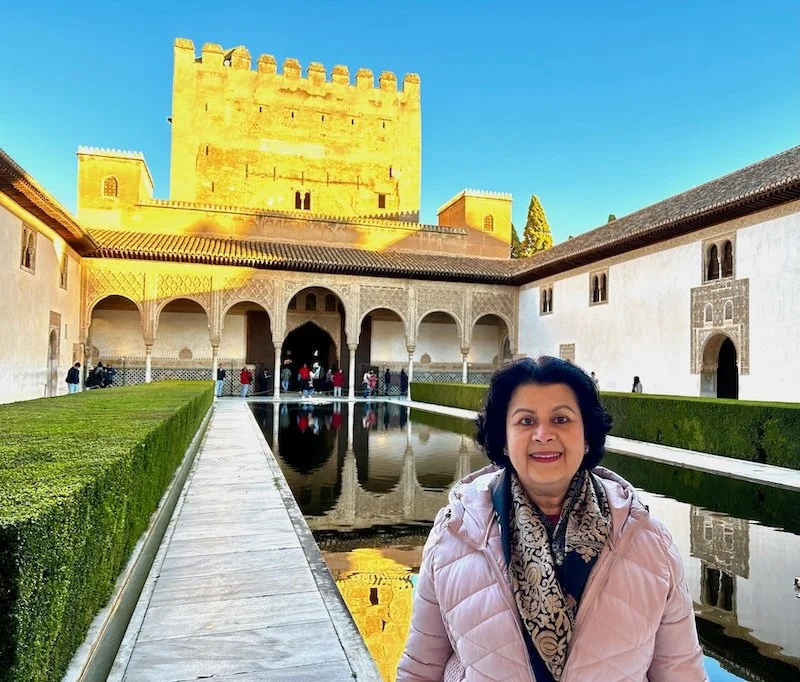
Bathed in the early morning sun, the walls of the Court of Myrtles were shaded in lustrous gold. It seemed believable that in a few minutes the courtyard would be filled with laughter, music and the chatter of courtiers. We could almost hear the sounds of feet on the marbled walkways around the reflecting pool. That perfect moment in the heart of the iconic Alhambra Palace explains why we found Granada so enchanting, and why our long-planned trip was so worthwhile.
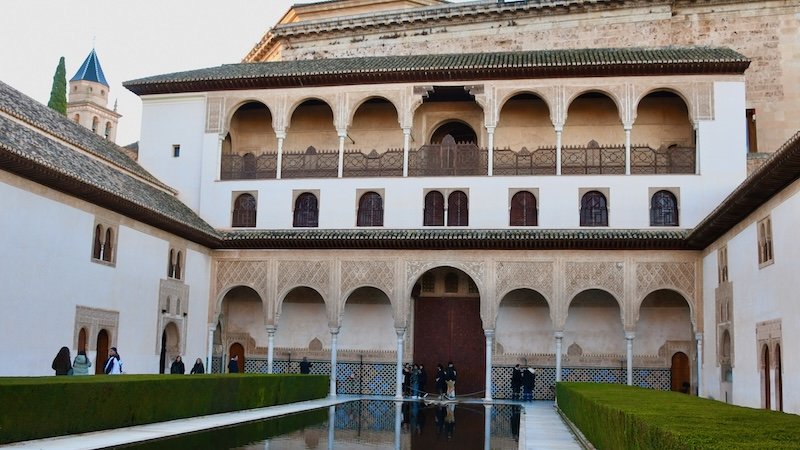
“The Alhambra is a marble poem, a dream made architecture”, wrote the French writer Victor Hugo. The huge palace was built in the 13th century by sultans of the Nasirid dynasty that ruled Granada. The Arabs had ruled the Iberian peninsula since the 8th century, but over centuries ceded more and more territory to the Spanish monarchs who were waging a war of reconquest. Granada was the last surviving Muslim kingdom in Spain, and in a final burst of inspiration the rulers built this magical palace, the culmination of centuries of Arab civilization in Andalusia.
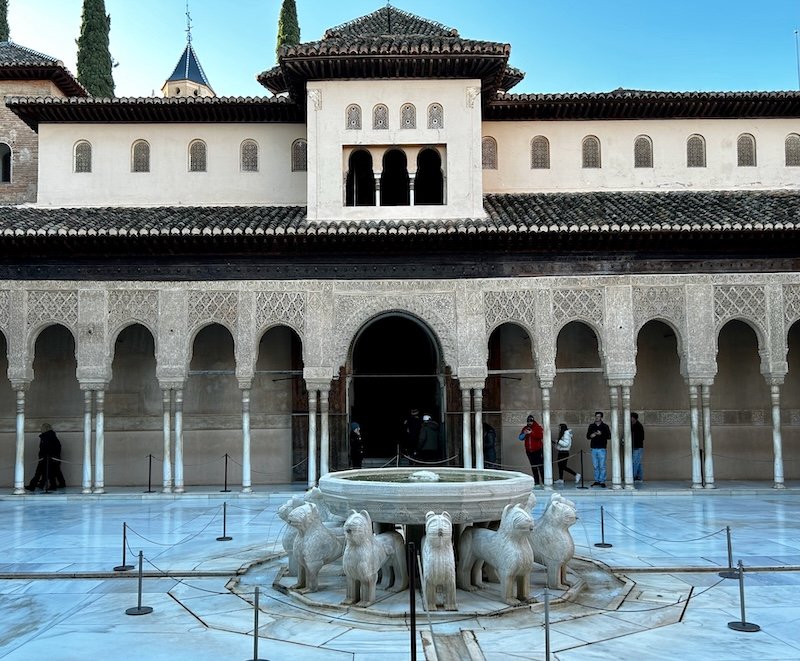
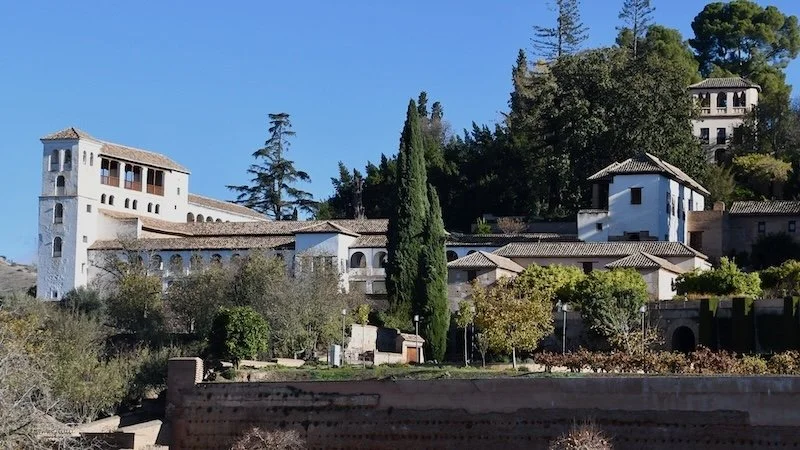
The Alhambra was a self-contained city, containing six palaces, gardens, orchards, markets, houses, mosques and public baths. The palaces are glories of architecture, built according to Moorish designs around courtyards with fountains and pools in their centres. Around them are walkways with arches covered in fine carving. We spent hours wandering through buildings admiring the exquisite details on their walls and ceilings. The terraced gardens are full of trees, flower beds, and rose arbours. Living in the Alhambra when Granada was at the height of its glory must have been a glimpse of paradise.
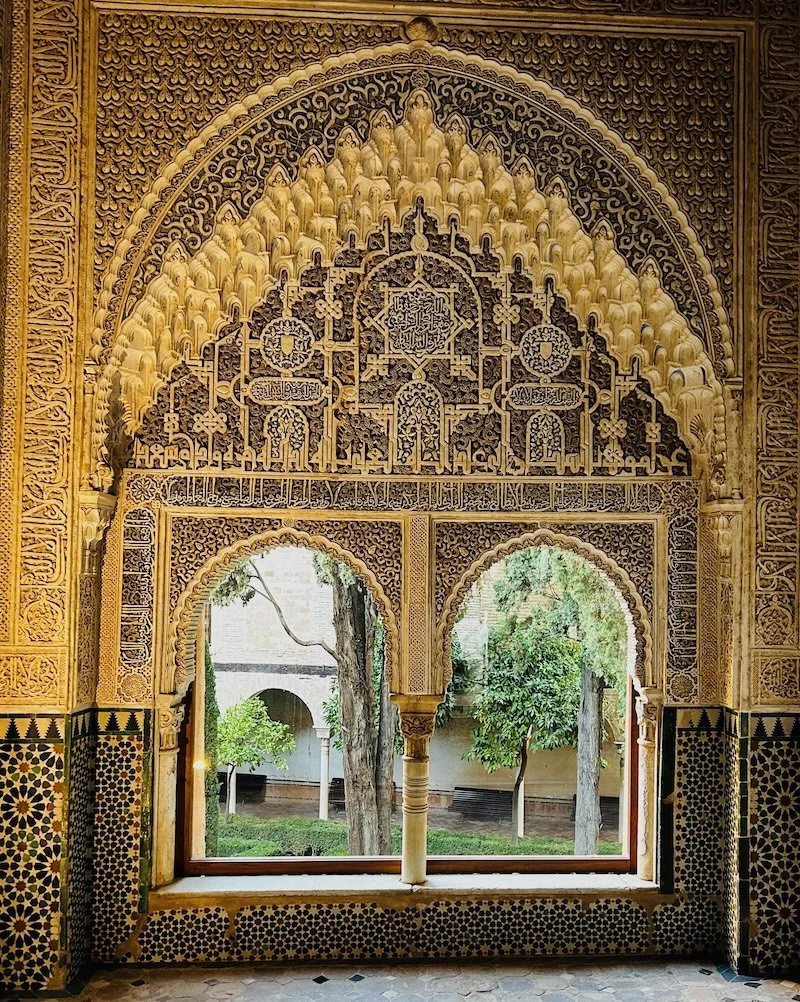
Muslim rule ended in 1492 when the last sultan surrendered the city to Ferdinand and Isabella, who now ruled all of Spain. They occupied the Alhambra and were so taken with its beauty that they did not modify the interior, which is how these devoutly Catholic rulers ended up living within walls that proclaimed that “There is no victor but Allah”, the motto of the Nasirid dynasty. Thanks to their forbearance the Alhambra is still there in all its original glory for us to admire.
When the Arabs first came to Spain they tried to recreate the life and culture of cities such as Baghdad and Damascus, which were the glories of the medieval world. They invited the Baghdadi musician and trendsetter known by the nickname “Ziryab” (the Blackbird) to come to Spain and demonstrate how to live well. Ziryab showed them how to style hair and use perfumes; how to wear the latest fashions and to match the colour of clothes to the season; and how to practice refined amusements, such as chess. But above all his innovations were culinary: he introduced new spices and ingredients; he decreed that meals were to be served in courses; that tables were to be set with fine crystal.
Food culture in Baghdad was exquisitely refined, and social life revolved around elaborate banquets. A popular game was to invite members of the dinner party to write a poem describing a particular dish. Once a guest had finished reciting the poem the chefs would prepare and serve the dish according to the instructions in the poem and the entire company was invited to judge whether it had been a success. One such 10th century poem involved making a sambusak, a meat-filled fried pastry:
…And when the burning flames have dried it quite,
Then, as thou wilt, in pastry wrap it round,
And fasten well the edges, firm and sound;
Or, if it please thee better, take some dough,
Conveniently soft, and rubbed just so,
Then with a rolling-pin let it be spread
And with the nails its edges docketed.
Pour in the frying-pan the choicest oil
And in that liquor let it finely broil…
(Translation: A,J, Arberry)
The sambusak travelled all over the world along with the Arabs, from Spain in the west to Indonesia in the east. The best known form of it today is perhaps the Indian samosa. While samosas can be stuffed with chicken, lamb or paneer, it is the traditional potato filled version that is the most popular. In my recipe below, puff pastry makes a quick and easy substitute for the traditional pastry, with the added advantage of baking instead of deep frying the samosas.
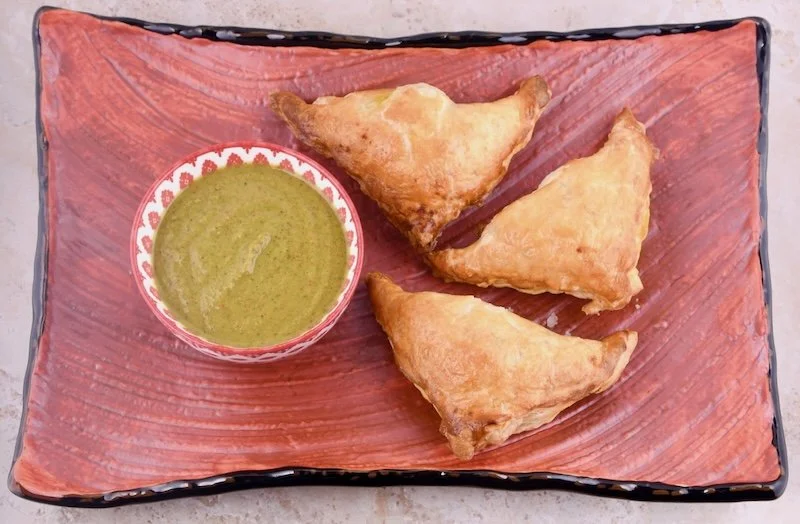
Samosas Stuffed with Spicy Potatoes
For the stuffing:
2 tbsp oil
1/2 tsp cumin seeds
1/2 inch piece of ginger, grated or minced
2 cloves garlic, grated or minced
1 medium onion, finely chopped
Salt to taste
1 tsp each: garam masala, ground coriander, ground cumin, dried fenugreek leaves
1/2 tsp each: cayenne pepper, turmeric
Salt to taste
2 large potatoes, cooked, peeled, lightly mashed
1/2 cup frozen peas
1/2 lemon, juiced
2 tbsp chopped fresh coriander leaves
Warm oil in a skillet over medium heat and add the cumin seeds. As soon as they splutter, add the ginger and garlic. Sauté for 30 seconds, then add the onions. Sauté for about 5 – 7 minutes, until the onions are lightly browned. Add the spices and cook for 30 seconds. Add the potatoes and peas. Stir to mix and cook uncovered for 5 minutes, stirring occasionally. Add the lemon juice and chopped fresh coriander leaves and stir to mix. Set this potato mixture aside to cool. You can make the potato mixture up to 3 days ahead of time and keep it refrigerated until needed.
For the samosa shell:
2 sheets of frozen puff pastry, 10 X 10 inch each, thawed
1/2 cup all purpose flour for dredging
1 egg, beaten
Preheat oven to 400F. Line two baking sheets with parchment.
Unroll one puff pastry sheet at a time, keeping the other one wrapped and refrigerated.
Cut each sheet into 3 long strips and cut each strip into 3 squares. Lightly roll each pastry square in the flour and set aside on a large plate. Repeat with the other sheet of puff pastry as well. Keep pastry squares covered lightly as you work with them.
To make samosas, place one pastry square in the palm of your hand. Put a heaping tablespoon of the potato mixture in the centre of the square. Fold the flap over the filling to form a triangular pouch and seal the edges by gently pressing on them with your fingers. Place on parchment lined tray.
Proceed similarly with the remaining puff pastry squares.
Brush the samosas lightly with the beaten egg.
Bake for about 18 - 20 minutes, until samosas are golden and flaky.
Serve right away.
Makes 18 samosas